Why Your Brain Won’t Shut Up: The Real Reason You Overthink at 3 AM
By Dr Naazneen
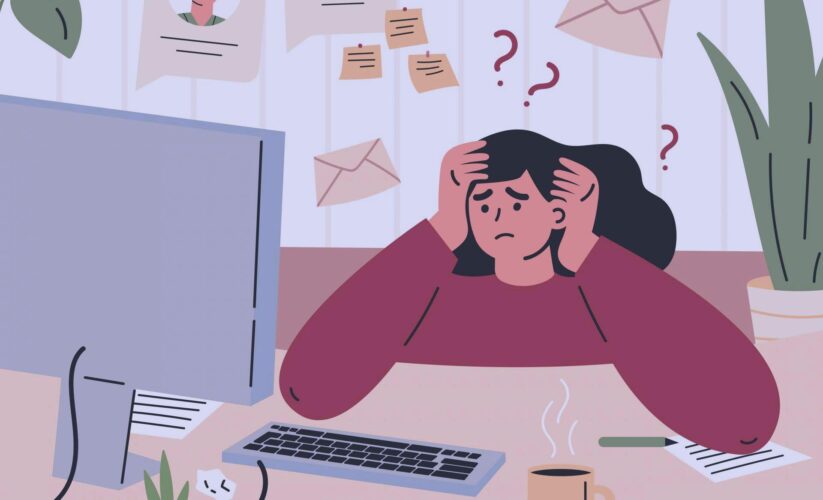
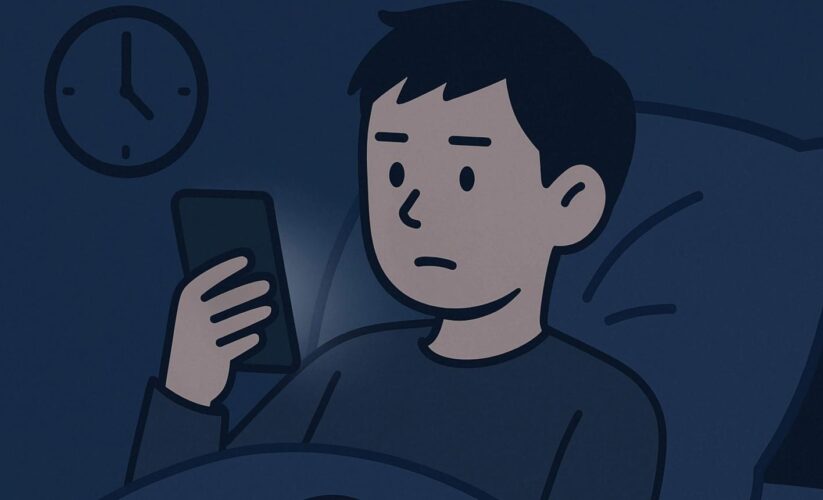
It’s 2 am. You’re not doing anything wrong. You’re just lying there, and suddenly your brain decides to replay a conversation from three years ago — the one where you maybe said something slightly awkward. Your heart rate goes up over nothing. Sound familiar?
If you’ve ever wondered “why do I do this to myself,” here’s the reframe I give patients every week: you’re not doing this to yourself. Your nervous system is doing this for you — it just hasn’t figured out that the danger already passed.
Your Brain Isn’t Broken. It’s Overprotective.
Overthinking isn’t a character flaw, and it isn’t a sign of intelligence gone wrong either (despite what “overthinkers are just too smart” content on social media likes to suggest). Clinically, it’s usually your brain’s threat-detection system running a background scan it can’t switch off — a pattern closely tied to anxiety.
An anxious brain treats uncertainty the same way it treats danger. So instead of resting, it keeps replaying, predicting, rehearsing — trying to solve a problem that already happened, or one that hasn’t happened yet.
Why 3 AM Specifically?
There’s a reason overthinking gets louder at night: there’s nothing left to distract you. No meetings, no scrolling, no noise competing for your attention. The moment your body finally slows down, your mind speeds up to fill the silence. It’s not that nighttime causes overthinking — it just removes everything that was quietly drowning it out during the day.
When Overthinking Is More Than a Habit
A little bit of overthinking before a big decision is completely normal. It becomes something worth paying attention to when it:
- Costs you sleep on most nights
- Feels impossible to switch off, even when you want to stop
- Comes with physical symptoms — racing heart, tight chest, restlessness
- Starts affecting your work, decisions, or relationships
- Is paired with persistent low mood, guilt, or self-blame
Lorem ipsum dolor sit amet, consectetur adipiscing elit. Ut elit tellus, luctus nec ullamcorper mattis, pulvinar dapibus leo.

When Overthinking Is More Than a Habit
A little bit of overthinking before a big decision is completely normal. It becomes something worth paying attention to when it:
- Costs you sleep on most nights
- Feels impossible to switch off, even when you want to stop
- Comes with physical symptoms — racing heart, tight chest, restlessness
- Starts affecting your work, decisions, or relationships
- Is paired with persistent low mood, guilt, or self-blame
I go into the full clinical picture — the underlying causes, the different psychiatric roots (anxiety, past trauma, perfectionism, depression, digital overload), and structured strategies to manage it — in my detailed guide, Why Am I Always Overthinking? A Psychiatrist Explains the Real Reasons & Solutions. If tonight’s 3 am spiral felt familiar, that post is the deeper dive.
One Small Thing to Try Tonight
Next time your brain starts looping, try naming it out loud (even mentally): “This is my brain trying to protect me, not a fact I need to solve right now.” This one sentence creates distance between you and the thought — it’s a small technique, but it’s often the first thing that breaks the loop.
The Bottom Line
You don’t need to “think your way out” of overthinking — that usually just feeds it. What actually helps is understanding why it’s happening and getting support that addresses the root cause, not just the symptom. If this has been a pattern for weeks or months rather than one bad night, it’s worth an actual conversation. Mind Tree offers confidential psychiatric consultations and therapy in Mumbai for exactly this.
If overthinking is paired with ongoing low mood, hopelessness, or thoughts of self-harm, please reach out to a mental health professional or crisis helpline right away — you don’t have to carry this alone.