
Alone in a Connected World: Why Are We Feeling More Lonely Than Ever?
By Dr Naazneen

“I talk to people all day… but I still feel lonely.”
“My phone never stops buzzing, yet I feel disconnected.”
“I’m surrounded by people, but I don’t feel understood.”
These are some of the most common statements I hear in clinical practice.
Many people assume loneliness only affects those who live alone or have very few friends.
But loneliness is much more complex than that.
As a psychiatrist, I’ve met people with large families, busy workplaces, and active social lives who still describe feeling profoundly alone.
Loneliness isn’t always about the number of people around you.
It’s about the quality of the connections you experience.
What Is Loneliness?
Loneliness is the distress that arises when there’s a gap between the relationships you have and the relationships you wish you had.
You can be:
- Married and lonely.
- Popular and lonely.
- Surrounded by family and lonely.
- Active on social media and lonely.
Feeling lonely doesn’t necessarily mean you’re isolated.
It often means you don’t feel emotionally seen, understood, or supported.
Why Are More People Feeling Lonely?
Several changes in modern life may contribute:
Digital communication
We message more.
But we don’t always connect more deeply.
Busy lifestyles
Work, responsibilities, and long commutes often leave little energy for meaningful conversations.
Comparison culture
Watching other people’s “perfect” friendships or relationships online can make our own lives feel inadequate.
Constant distraction
Even when we’re together, many of us are also looking at our phones.
Being physically present isn’t always the same as being emotionally present.
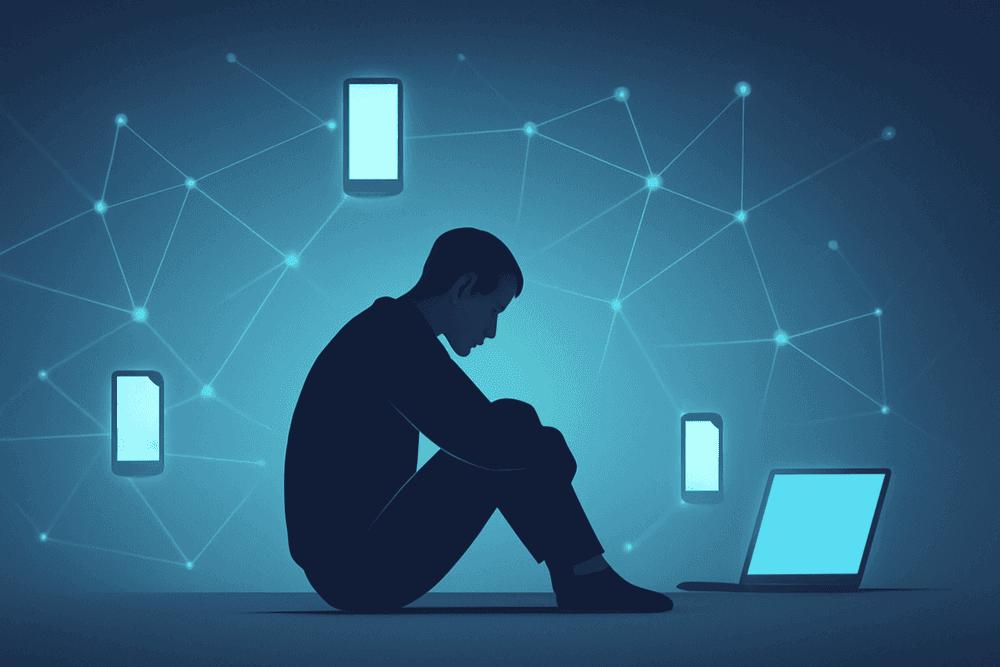
The Difference Between Being Alone and Feeling Lonely
Being alone can be peaceful.
Many people enjoy solitude.
Loneliness is different.
It’s the emotional experience of feeling disconnected, even in the presence of others.
Learning to enjoy solitude can strengthen mental well-being.
Persistent loneliness, however, deserves attention.
How Loneliness Affects Mental Health
Research suggests that chronic loneliness can be associated with:
- Increased stress
- Poor sleep
- Reduced motivation
- Lower self-esteem
- Symptoms of anxiety
- Symptoms of depression
Loneliness doesn’t always cause these problems directly, but it can contribute to emotional distress and make existing mental health challenges harder to manage.
Signs You May Be Experiencing Emotional Loneliness
You may notice that you:
- Feel misunderstood.
- Avoid sharing how you truly feel.
- Spend hours online but rarely feel connected.
- Hesitate to ask for support.
- Feel emotionally distant from people you care about.
- Miss having someone you can talk to openly.
What Actually Helps?
1. Prioritise Depth Over Frequency
One meaningful conversation can have more impact than dozens of brief interactions.
2. Reach Out First
Many people wait for others to contact them.
Sometimes taking the first step can strengthen a relationship.
3. Create Phone-Free Moments
When spending time with someone, give them your full attention.
Eye contact, listening, and presence matter.
4. Join Communities
Shared interests often create opportunities for genuine connection.
Consider volunteering, joining a class, or participating in local groups.
5. Be Honest About How You Feel
Opening up can feel uncomfortable.
But authentic conversations often begin when someone is willing to be vulnerable.
A Psychiatrist’s Perspective
Loneliness is not a sign of weakness.
It is a human experience that many people face at different stages of life.
If feelings of loneliness are persistent, accompanied by low mood, anxiety, hopelessness, or thoughts of self-harm, it’s important to seek professional support.
You don’t have to navigate these feelings alone.
Final Thoughts
Technology has made it easier than ever to reach people.
But real connection is built through presence, trust, and understanding—not simply proximity or notifications.
The goal isn’t to have more contacts.
It’s to have more meaningful conversations.
Sometimes healing begins not when someone finally understands you…
but when you allow yourself to be truly seen.