Health Anxiety in the Age of Google & Reels: When Every Symptom Feels Like a Serious Illness
By Dr Naazneen

Have you ever searched a mild headache on Google and convinced yourself it was a brain tumour?
Or watched one mental health Reel after another and suddenly wondered if every symptom applied to you?
If yes, you’re not alone.
As a psychiatrist, one of the fastest-growing concerns I see today isn’t just anxiety—it’s health anxiety, amplified by unlimited access to medical information and social media.
Information is powerful.
But when consumed without context, it can quietly become fuel for anxiety.
What Exactly Is Health Anxiety?
Health anxiety is a condition where a person becomes excessively worried about having or developing a serious illness—even when medical examinations are normal.
Every small sensation feels like evidence.
A slight chest discomfort becomes a heart attack.
A twitch becomes a neurological disease.
A headache becomes something catastrophic.
The fear feels real, even when the illness isn’t.
This condition is medically known as Illness Anxiety Disorder.
Why Is It Trending More Than Ever?
Social media has changed how we consume health information.
Today we see:
- “5 signs you have ADHD.”
- “If you do this, you might have anxiety.”
- “This symptom could indicate cancer.”
While many creators genuinely want to educate, short-form content often removes important medical context.
Algorithms also learn what worries you.
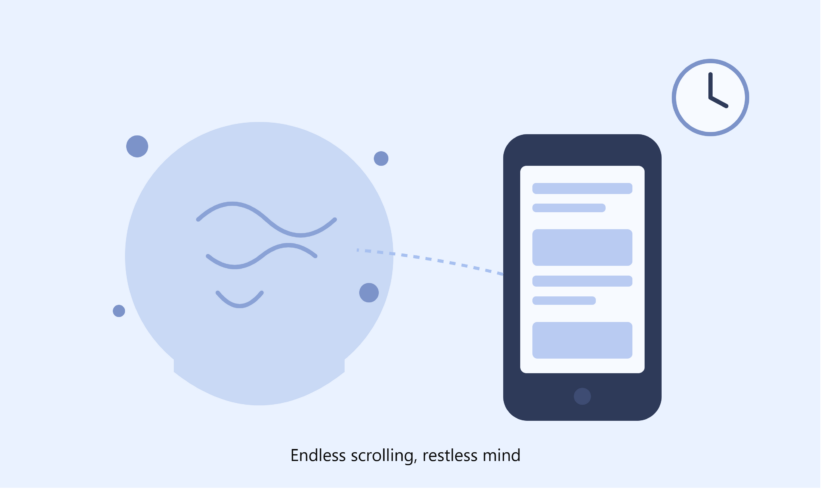
The more health-related content you watch, the more similar videos appear—creating a cycle where your brain begins to believe danger is everywhere. Excessive exposure to alarming health content and repeated symptom checking can reinforce anxiety rather than provide reassurance.
The Google Trap (Cyberchondria)
Many people do this:
A symptom appears.
↓
Google search.
↓
Worst-case diagnosis appears.
↓
Heart rate increases.
↓
More searching.
↓
More anxiety.
↓
More physical symptoms.
↓
Even more searching.
Psychiatrists often call this cyberchondria—health anxiety made worse by compulsive online symptom searches.
Instead of reassurance, endless searching usually creates more uncertainty.
Signs You May Be Experiencing Health Anxiety
You may relate if you:
- Frequently Google symptoms.
- Feel temporary relief after medical tests—but worry returns quickly.
- Visit multiple doctors despite normal reports.
- Constantly check your pulse, skin, or body.
- Avoid certain foods or activities out of fear.
- Spend hours watching health-related videos.
- Believe doctors have “missed something.”
Having one or two of these occasionally is common.
The concern arises when these behaviours start affecting your work, sleep, relationships, or quality of life.
Why Does the Brain Do This?
Our brains are designed to detect threats.
When anxiety increases, your attention becomes hyper-focused on your body.
Normal sensations that most people ignore suddenly feel alarming.
This creates a loop:
Fear → Body Sensation → More Fear → More Body Sensations
The more attention you give these sensations, the stronger they often seem.
How Can You Break the Cycle?
Here are a few practical strategies:
1. Limit Symptom Googling
Give yourself a rule:
No searching symptoms immediately.
Instead, wait 24 hours unless it’s a genuine medical emergency.
2. Choose Reliable Sources
If you need medical information, rely on trusted healthcare websites—not random videos or comments.
3. Reduce Health Content Consumption
Your social media feed shapes your thoughts.
Curate it intentionally.
Follow accounts that educate responsibly rather than those designed to trigger fear.
4. Practise Grounding
When anxiety rises:
- Notice five things you can see.
- Four things you can touch.
- Three things you can hear.
- Two things you can smell.
- One thing you can taste.
This helps shift attention away from catastrophic thinking.
5. Seek Professional Help
If health worries are becoming persistent, overwhelming, or interfering with daily life, speaking with a psychiatrist or mental health professional can help identify whether anxiety—not illness—is driving the distress.
Health Anxiety and Bipolar Disorder
Although health anxiety and bipolar disorder are different conditions, anxiety symptoms frequently occur alongside bipolar disorder, making diagnosis and treatment more complex.
If you’d like to understand bipolar disorder better, read our detailed guide:
Understanding Bipolar Disorder on Mind Tree. Understanding Bipolar Disorder
You may also find more evidence-based mental health articles on the Mind Tree Blog.
Final Thoughts
Feeling concerned about your health is normal.
Living in constant fear of illness is not.
Your body sends signals.
But anxiety can amplify those signals until they feel impossible to ignore.
Before assuming the worst, pause.
Not every headache is a tumour.
Not every heartbeat means danger.
And not every social media video reflects your personal health.
Sometimes, the problem isn’t your body.
It’s the anxiety convincing you that something is wrong.
If these worries are becoming overwhelming, remember that health anxiety is treatable—and you don’t have to manage it alone.